Guangzhou Attractions 10 min read
Yongqing Fang Travel Guide: Lingnan Heritage, Arcades & Walking Tour
Explore Yongqing Fang in Guangzhou: Enning Road Qilou arcades, Cantonese Opera Art Museum, Bruce Lee Ancestral Residence, Moon Bridge, and local Xiguan dining.
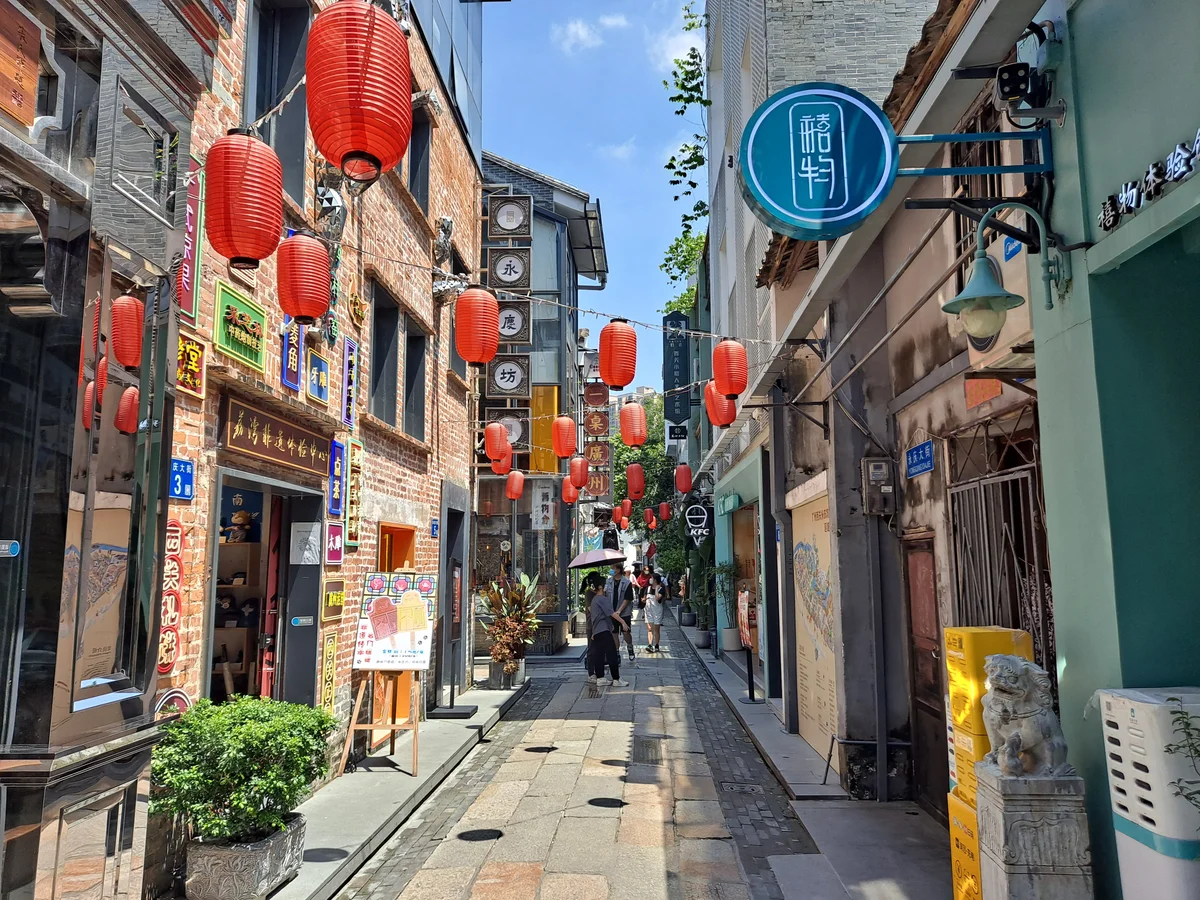
In the historic Xiguan heartland of Guangzhou's Liwan District, where the ancient waterways of Lychee Bay weave through urban alleys, lies Yongqing Fang (永庆坊). Set along the shade-dappled arcade corridor of Enning Road, this revitalized cultural district represents the creative renaissance of Old Canton. Here, the rhythmic clanging of handmade copper workshops mingles with classical operatic melodies floating across stone-bridged canals, framed by gray-brick vernacular courtyards and ornate Victorian-Cantonese shophouses.
Unlike modern commercial precincts built on razed earth, Yongqing Fang stands as China's premier national benchmark for "micro-regeneration" (微改造)—a surgical, embroidery-like urban renewal strategy that preserved every foot of century-old granite paving, brick gable walls, and ancestral residences while weaving in independent bookshops, artisan tea houses, and the sweeping classical pavilions of the Cantonese Opera Art Museum.
Introduction: Guangzhou's Living Museum of Xiguan Heritage
Covering an area of several hundred square meters across two primary phases, Yongqing Fang is situated at the confluence of Enning Road, Baohua Road, and the Lychee Bay canal system. For centuries, Xiguan (the Western Suburbs outside Guangzhou's ancient city walls) was the prosperous residential retreat of Thirteen Hongs compradors, wealthy silk and tea merchants, and legendary operatic performers.
Today, Yongqing Fang connects seamlessly with Shangxiajiu Pedestrian Street to the east, Shamian Island to the south, and Lychee Bay to the west. It forms an essential cultural corridor where international travelers can experience authentic Lingnan lifestyle without the artificial sterility of reconstructed tourist villages.
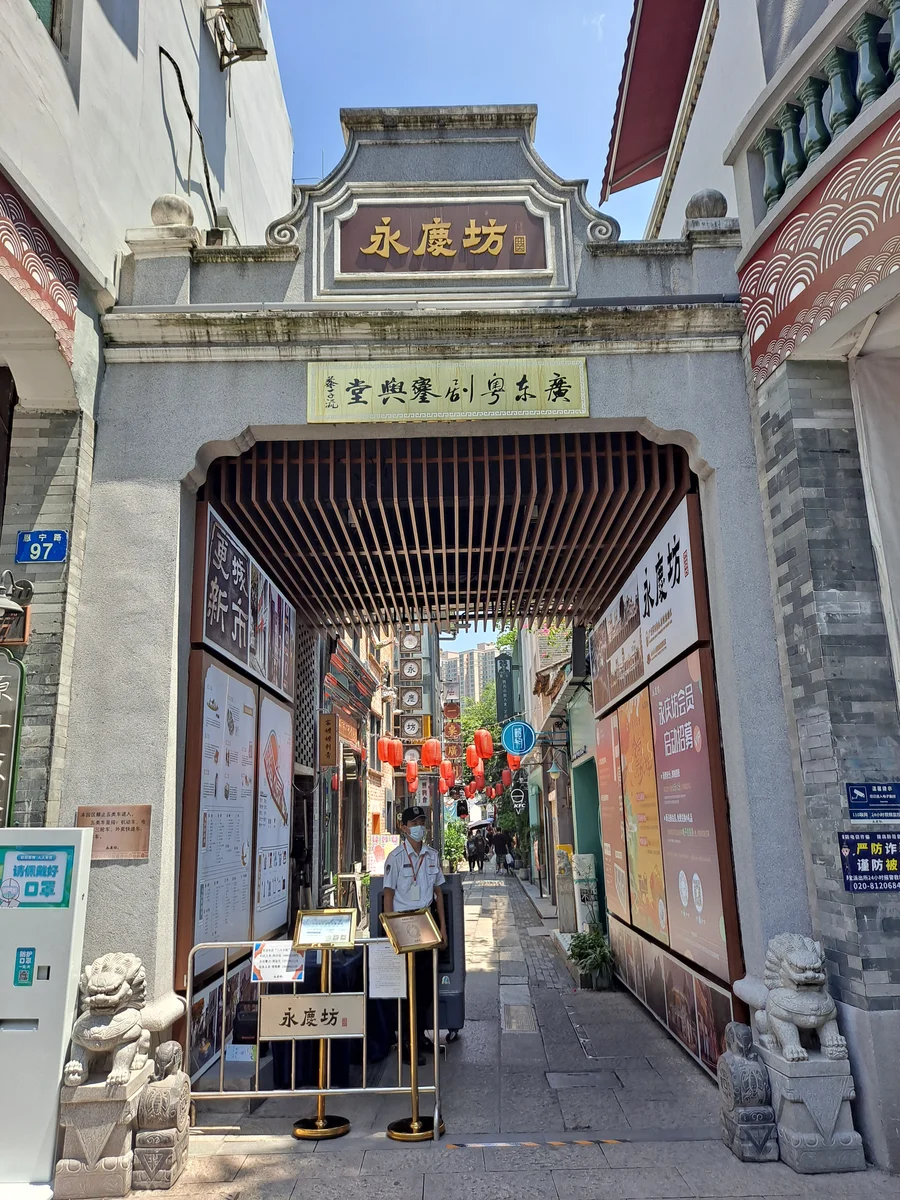
The Philosophy of Micro-Regeneration: Preserving Lingnan Memory
By the early 2000s, the Enning Road neighborhood had deteriorated into one of Guangzhou's most structurally precarious urban sectors. Many Qing Dynasty brick tenements suffered from termite infestations, sinking foundations, and leaky tiled roofs. While conventional urban planning in Chinese metropolises often favored sweeping demolition and high-rise redevelopment, municipal authorities in 2015 pivoted toward an organic, conservative approach known as "stitching embroidery" (绣花功夫).
Under this philosophy, conservation architects mapped every individual building structure:
- Authentic Materiality: Original granite paving stones (麻石板), blue-gray bricks (青砖), and timber purlins were individually salvaged, cataloged, and cleaned before being reinstalled.
- Invisible Infrastructure: Subsurface water drainage, high-speed fiber-optic lines, fire hydrants, and electrical conduits were buried beneath the historic stones without disturbing above-ground alley proportions.
- Adaptive Reuse: Former residential compounds were transformed into art spaces, boutique lodgings, craft workshops, and bookstores, allowing original residents to coexist with a vibrant community of young creators and performers.
Architectural Highlights Across Yongqing Fang
Wandering through the narrow corridors of Yongqing Main Street and its perpendicular lanes offers a masterclass in Lingnan vernacular building techniques adapted specifically to South China's hot, monsoonal climate.
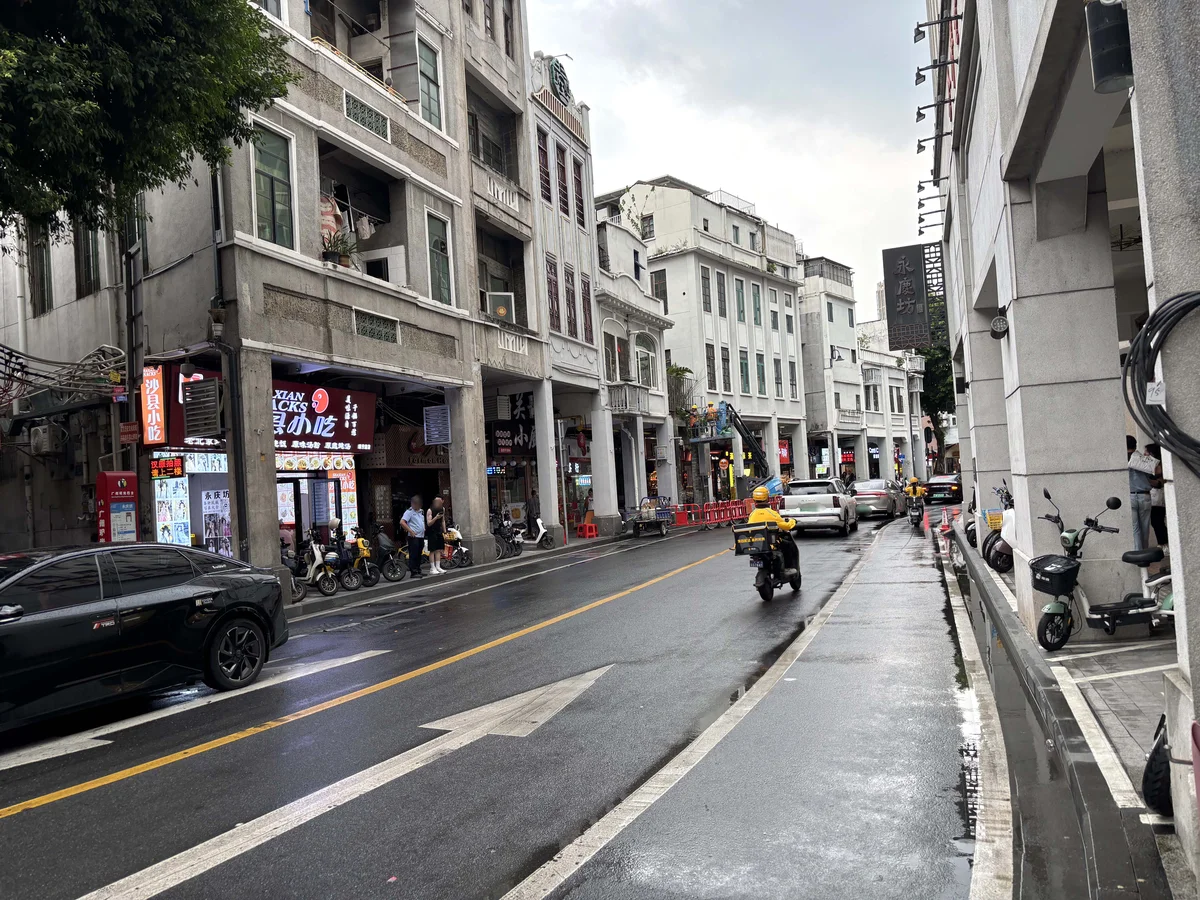
Enning Road Qilou Arcade Street
Constructed in 1931 and stretching over 1,100 meters, Enning Road represents Guangzhou's most continuous and architecturally complete Qilou (arcade) street. Born from urban planning regulations of the Republic of China era, these shophouses feature a recessed ground floor forming a continuous, sheltered public colonnade that shields pedestrians from subtropical downpours and blinding summer sunshine.
Upper residential stories project forward over the pavement, supported by classical columns. Their street-facing facades blend Western neoclassical pilasters, Baroque decorative pediments, and geometric Art Deco motifs with local Cantonese plaster reliefs and glazed ceramic balusters.
Xiguan Grand Mansions and the Three-Piece Doorway
Deep inside the alleys, traditional Xiguan Dawu (Xiguan Grand Mansions) exhibit their iconic residential entrance, known as the "Three-Piece Door" (三件头):
- Low Half-Door (矮脚吊扇门): A pair of knee-to-shoulder wooden folding shutters that block external sightlines from the street while allowing fresh air and daytime sunlight to pour into the vestibule.
- Sliding Timber Grille (趟栊门): An imposing security gate composed of 13, 15, or 17 solid hardwood horizontal cylinders sliding inside a granite sill track. It provided robust protection against intruders while allowing cross-ventilation breezes to cool the home day and night.
- Solid Hardwood Door (大门): Massive, heavy timber double doors reinforced with brass fittings and iron drop-bolts, shut and barred tightly only at bedtime or during typhoons.
Manchu Stained-Glass Windows and Sunlit Courtyards
Step inside any restored heritage hall to admire authentic Manchu Windows (满洲窗). Originating from Qing Dynasty maritime trade imports, these timber-mullioned sashes feature etched and stained sheet glass in brilliant primary hues of cobalt blue, crimson ruby, and amber gold. Acid-etched glass panes display delicate Lingnan landscapes, prunus blossoms, and calligraphic couplets, filtering intense afternoon glare into soothing kaleidoscope reflections across gray-brick parlor floors.
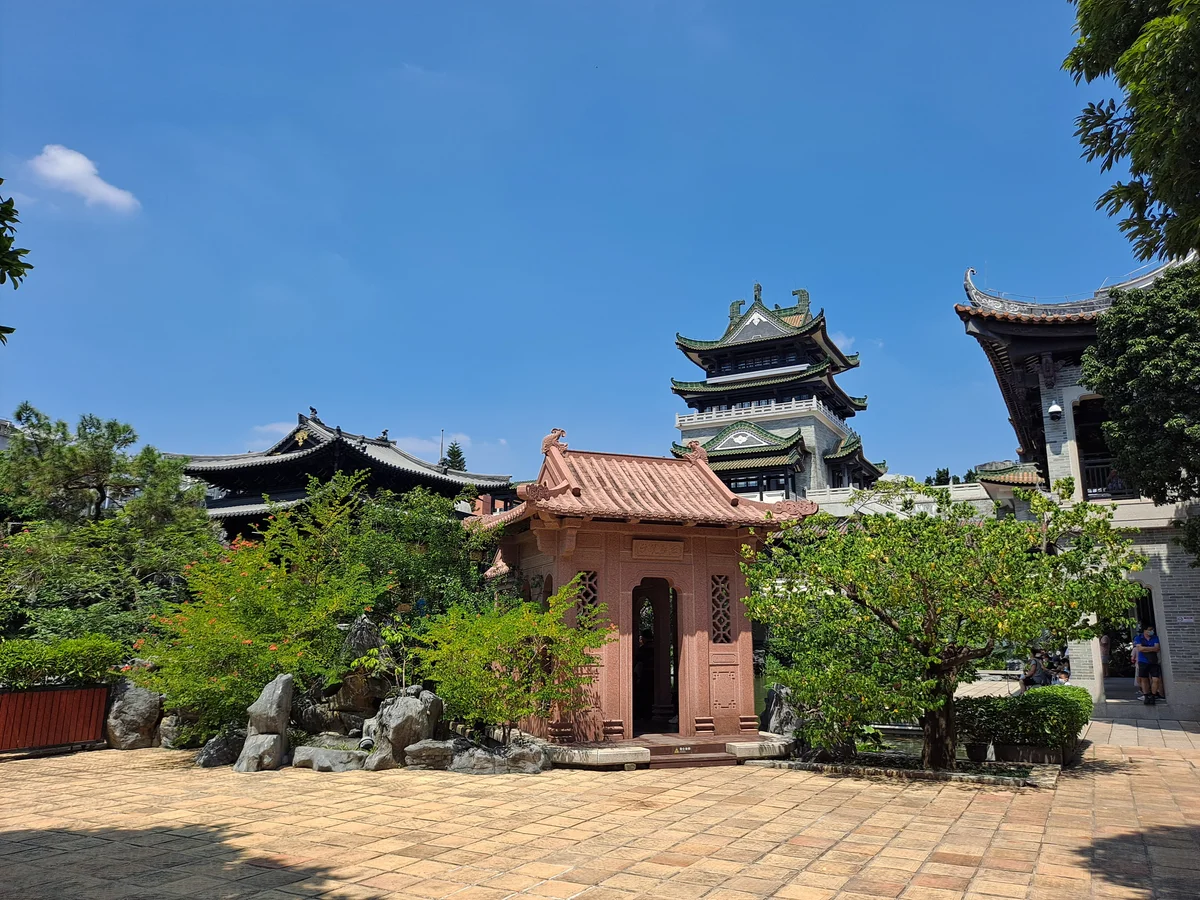
The Cantonese Opera Art Museum: Garden of Melodies
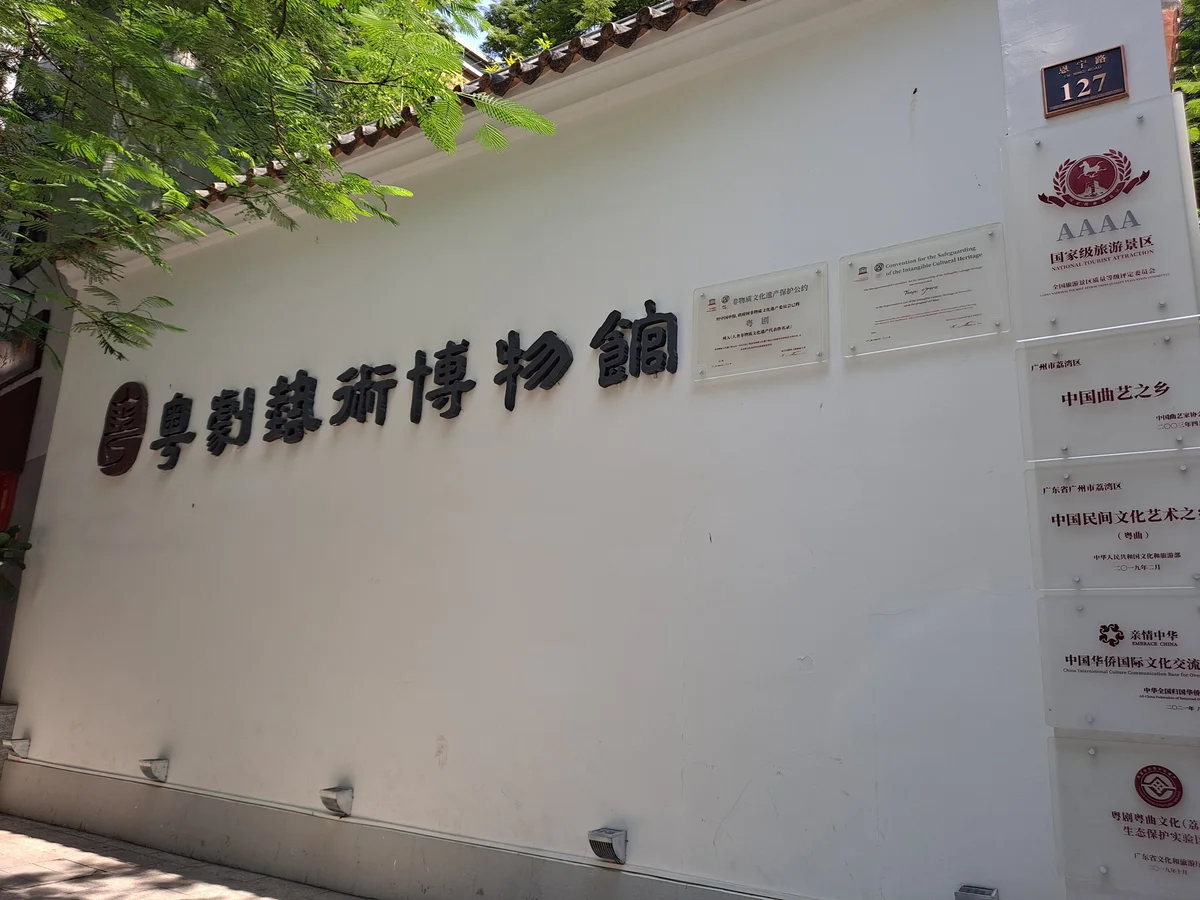
Located at No. 127 Enning Road, the Cantonese Opera Art Museum (粤剧艺术博物馆) is the cultural jewel of Yongqing Fang. Spanning 17,000 square meters, this award-winning municipal museum is designed in the sublime classical Lingnan courtyard garden style, conceived as a living homage to Cantonese opera—inscribed on UNESCO's Representative List of the Intangible Cultural Heritage of Humanity.
Waterfront Guangqing Stage and Red Boat Traditions
The visual centerpiece of the complex is the Guangqing Stage, a freestanding wooden performance pavilion erected directly over the central lake. Built using ancient tenon-and-mortise carpentry without a single iron nail, the stage features double-eaved hip roofs adorned with Shiwan glazed pottery ridge crests illustrating historical epics.
During daily performance windows, musicians playing the gaohu (Cantonese spike fiddle), erxian, and yueqin join costumed operatic performers. The dramatic vibrato, stylized combat, and flowing water sleeves echo over the reflecting pool, evoking the historic era when itinerant theatrical troupes traveled across the Pearl River Delta aboard distinctive scarlet-hulled sailing vessels known as "Red Boats" (红船).
Historic Exhibitions and Bahe Association Archives
Descend into the underground exhibition galleries to examine over 5,000 cataloged artifacts, including hand-embroidered golden theatrical robes from the late Qing Dynasty, traditional headdresses, historic phonograph records, and handwritten libretto scrolls. The museum also chronicles the nearby Bahe Academy (八和会馆) and Luan'yutang (銮舆堂)—the ancestral guildhalls of Cantonese martial acrobats and performers located just around the corner on Enning Road.
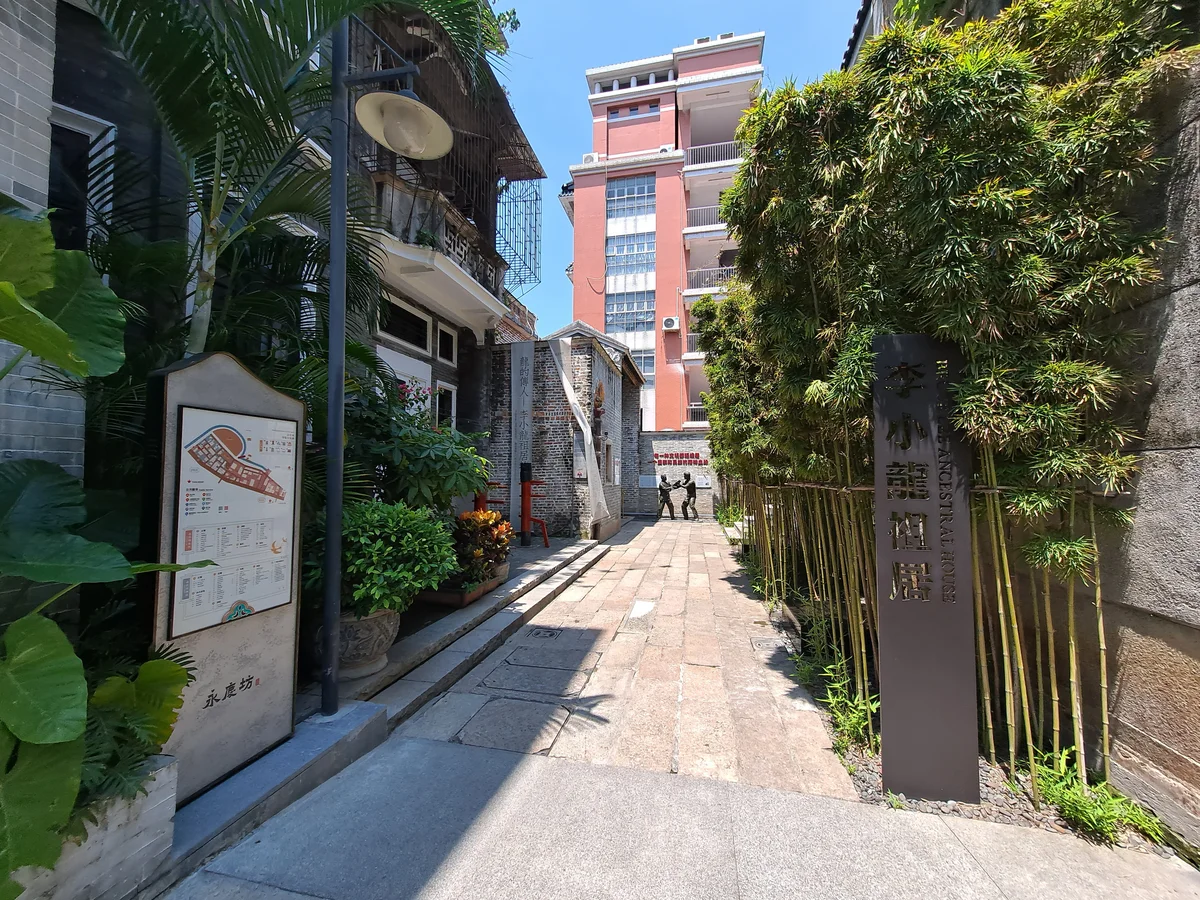
Bruce Lee's Ancestral Residence and Intangible Cultural Heritage
Tucked into No. 13 Yongqing 1st Lane is the ancestral residence of martial arts legend Bruce Lee (李小龙祖居). The 200-square-meter, two-story brick-and-timber mansion was purchased in the 1940s by Bruce Lee's father, Li Hoi-chuen (李海泉), one of the celebrated "Four Great Cantonese Opera Clowns" (粤剧四大名丑).
The Residence of Cantonese Opera Star Li Hoi-chuen
The house features an authentic three-entry floor plan complete with a central skylit atrium (天井) that collects rainwater according to Cantonese feng shui principles of wealth retention. While Bruce Lee spent his formative years in Hong Kong and the United States, he lived in this home as a toddler. Today, the residence houses an intimate biographical museum displaying Li Hoi-chuen's stage robes and personal memorabilia alongside Bruce Lee's martial philosophy, Jeet Kune Do training gear, and interactive multimedia installations.
Master Workshops: Enning Copperware, Guangcai Porcelain, and Guangxiu
Yongqing Fang serves as a vital incubator for Guangzhou's premier intangible cultural crafts:
- Enning Copperware: Enning Road has been the center of Cantonese coppersmithing for over a century. Master artisans hand-hammer raw copper sheets on steel anvils, forging tea kettles, hot pots, and ladles without welded seams.
- Guangcai Porcelain (广彩): Famous for its vivid gold enamels and multi-colored overglaze patterns, master studios here demonstrate freehand painting of peonies, court scenes, and phoenixes on pure white porcelain.
- Guangxiu Embroidery (广绣): Renowned for its lustrous silk threads and intricate needlework, depicting translucent lychees, kingfishers, and goldfish with photographic precision.
The Moon Bridge and Nighttime Illuminations along Lychee Bay
As evening falls, follow the stone pathways toward the western edge of Yongqing Fang Phase II, where the canal opens into the wider Lychee Bay waterway. Spanning the canal is the now-iconic Moon Bridge (月亮桥).
Engineered with recessed, warm-amber LED illumination along its semicircular stone arch, the bridge's arch reflects perfectly into the still, dark water below precisely at 7:00 PM. The combination creates a luminous, full glowing circle that echoes the famous lines of Tang Dynasty poet Li Bai. Flanked by overhanging willow boughs, gently passing wooden sampans, and glowing red silk lanterns, it has become one of the most photographed night spectacles in modern Guangzhou.
Self-Guided Walking Route and Photography Tips
To experience Yongqing Fang at its best, plan your visit for the late afternoon, transitioning seamlessly into golden hour and the illuminated nightscape.
Recommended 3-Hour Itinerary
- 2:30 PM – Arrival via Huangsha Metro: Exit via Huangsha Station Exit B and stroll north along Conggui Road into Enning Road, inspecting historic copperware stalls along the shaded arcades.
- 3:00 PM – Cantonese Opera Art Museum: Explore the lakeside gardens, observe live open-air opera recitals at Guangqing Stage, and visit the underground costume gallery.
- 4:15 PM – Yongqing Alleys & Bruce Lee Residence: Wander through Yongqing 1st and 2nd Lanes, visiting Bruce Lee's ancestral home, independent craft boutiques, and Zhongshuge bookstore.
- 5:30 PM – Xiguan Culinary Tasting: Sample crispy fish skin at Chen Tianji or coconut ice cream at Shunji Dessert along Baohua Road.
- 6:45 PM – Moon Bridge & Canal Sunset: Take up position along the steps of the Lychee Bay canal to capture the Moon Bridge lighting ceremony at dusk.
Optimal Photo Spots and Lighting
- Cantonese Opera Museum Corridor: Stand inside the covered waterside gallery looking across at Guangqing Stage between 3:30 PM and 4:30 PM for warm sunlight reflecting off glazed eaves.
- Manchu Window Details: Shoot upward against backlit courtyards inside heritage tea houses to highlight the saturated ruby and cobalt glass patterns.
- Moon Bridge Reflection: Arrive at the canal observation terrace on the north bank 15 minutes before 7:00 PM to secure tripod space before crowds gather.
Authentic Xiguan Dining Around Yongqing Fang
No trip to Yongqing Fang is complete without indulging in western Guangzhou's legendary culinary street food, celebrated in the local saying "Shi Zai Guangzhou, Wei Zai Xiguan" (Food is in Guangzhou, but flavor is in Xiguan):
| Restaurant | Must-Try Dishes | Location |
|---|---|---|
| Chen Tianji (陈添记) | Crispy grass carp skin with sesame and peanuts, traditional hand-rolled rice noodle sheets | Near Shisanhang / Baohua Road branch |
| Shunji Ice House (顺记冰室) | Handmade fresh coconut ice cream, durian ice cream, mango shaved ice | No. 85 Baohua Road |
| Kai Ji Desserts (开记甜品) | Traditional sweet red bean soup with aged dried tangerine peel, ginger milk curd | Pantang Road / Lychee Bay |
| Guangzhou Restaurant (广州酒家) | Michelin-recommended morning dim sum, Wenchang chicken, barbecue pork buns | No. 2 Wenchang South Road |
Practical Travel Logistics: Metro, Hours, and Nearby Sights
| Detail | Travel Information |
|---|---|
| Admission Fee | Free (District streets open 24/7; Cantonese Opera Museum free with advance online reservation) |
| Museum Hours | Cantonese Opera Art Museum: 9:00 AM – 5:00 PM (Closed Mondays, last entry 4:30 PM) |
| Nearest Metro Stations | Huangsha Station (Line 1 & 6, Exit B, 500m walk) / Changshou Lu Station (Line 1, Exit D2, 800m walk) |
| Suggested Duration | 2.5 to 4 hours |
| Connecting Attractions | Shamian Island (1 km south), Chen Clan Ancestral Hall (1.5 km northeast), Sacred Heart Cathedral (3 km east) |
Frequently Asked Questions About Yongqing Fang
Do I need tickets or reservations to visit Yongqing Fang?
No ticket is required to enter the Yongqing Fang public streets, alleyways, or commercial areas; the neighborhood is completely open 24 hours a day. However, admission to the Cantonese Opera Art Museum requires a free reservation via its official WeChat mini-program, and visitors must present a passport or Chinese national ID at the gate.
What time does the Moon Bridge turn on its lights?
The illuminations on the Moon Bridge are typically activated around 7:00 PM each evening (slightly earlier in winter around 6:30 PM and later in peak summer around 7:15 PM) and remain lit until approximately 10:00 PM.
How does Yongqing Fang compare with Shamian Island and Chen Clan Ancestral Hall?
While Shamian Island showcases European neoclassical colonial concession architecture and Chen Clan Ancestral Hall preserves an academic masterpiece of Qing Dynasty decorative arts, Yongqing Fang represents living, grassroots Cantonese civic life—highlighting Xiguan merchant homes, covered arcade sidewalks, active operatic theaters, and contemporary artisan culture.
Is Yongqing Fang accessible for travelers with strollers or limited mobility?
Yes. Main avenues through Yongqing Fang Phase I and II, as well as the Cantonese Opera Art Museum, are equipped with ramps and stone curb cuts. However, some secondary residential lanes retain historic uneven granite flagstones where strollers may experience slight bumps.